

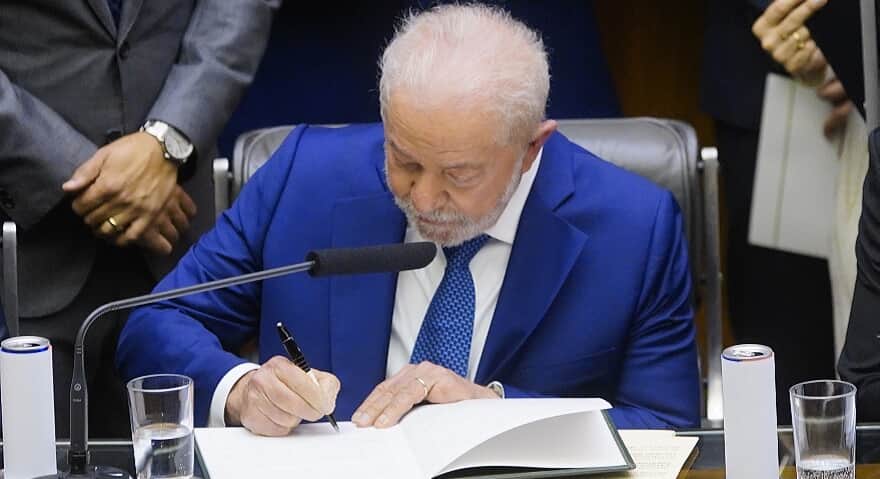
President Luiz Inácio Lula da Silva signed, with vetoes, the law governing sports betting and online casinos run by companies popularly known in Brazil as “bets.” The measure was made official in a supplementary edition of the Federal Official Gazette (Diário Oficial da União) last Saturday, December 30.
Among Lula’s vetoes, the most notable struck provisions that would have reduced tax revenue from betting. The president rejected the income tax exemption for bettors whose annual winnings fall below the first income tax bracket, currently set at R$2,112 (about $430). As a result, the 15% rate on sports betting winnings will apply to any amount a bettor wins. The president also vetoed a clause that would have allowed bettors to deduct their losses when calculating the amount subject to tax.
According to the veto message, keeping the text approved by Congress “would result in income taxation that differs from that applied to other lottery types, creating a distinction in tax treatment without any justification for it.”
The newly signed law is part of Finance Minister Fernando Haddad’s push to increase government revenue. It sets general guidelines for how “bets” operate. Companies wishing to offer these services will have to pay for a license issued by the Finance Ministry, costing up to R$30 million (about $6 million). In addition, a 12% tax will apply to operators’ revenue after prizes paid out.
The law also sets out how the money raised will be used. Unclaimed winnings, for example, will go to the Student Financing Fund (Fies) and the National Fund for Public Disasters, Protection and Civil Defense.
This brings an end to the online betting controversy and the media-and-police spectacle that saw dozens of influencers and other promoters of online games arrested and publicly embarrassed. Brazilian law is settled on the principle that changes to the law, or a new law, only apply retroactively when they benefit people, never against them. In other words, legally speaking, both today and looking back, those who promoted these games did nothing wrong. And the law is now in place: passed by Congress, signed by the president and published in the Federal Official Gazette.