

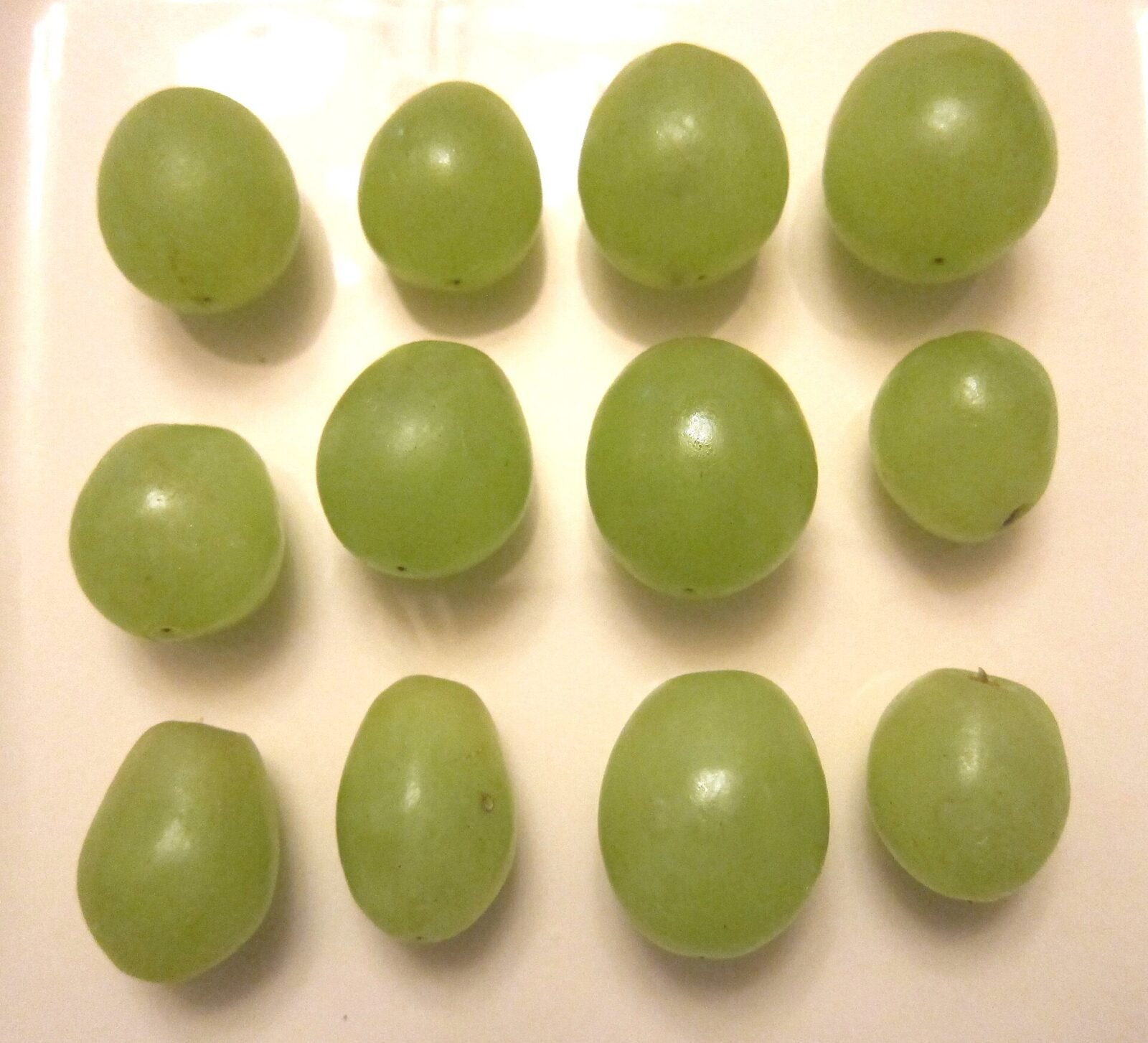
In Spain, the last seconds of the year are not spent counting down. They are spent eating. At midnight on December 31, millions of Spaniards try to swallow 12 grapes, one with each of the 12 strokes of the clock, before the new year begins. Finish all 12 in time and, according to tradition, the next 12 months will bring good luck.
The short answer
Spaniards eat 12 grapes at midnight because each grape stands for one month of the coming year, and eating them in time with the clock is meant to bring a year of luck and prosperity. The custom is called las doce uvas de la suerte, “the 12 grapes of luck.” It dates back to at least the 1890s, but it became a national habit in 1909, when grape growers in the Alicante region had a huge harvest and promoted the tradition to sell their surplus.
How the 12 grapes tradition works
- People get 12 grapes ready before midnight, often peeled and seeded to make them easier to eat fast.
- When the clock starts striking 12, you eat one grape per chime, roughly one every few seconds.
- Each grape represents a month. Fail to finish and, the joke goes, some months may not be so lucky.
- In some regions, the custom was also once believed to keep away witches and bad luck.
Most families do it at home after New Year’s Eve dinner, which Spaniards call Nochevieja. Others go to the main square of their town to eat the grapes with a crowd.
Puerta del Sol: Spain’s Times Square
The most famous place to eat the grapes is the Puerta del Sol in Madrid, where the tradition started. Crowds gather under the clock tower of the Royal House of the Post Office, and the chimes are broadcast live on national TV and radio, as Spanish television has done since 1962. Even people at home time their grapes to the Puerta del Sol clock on TV, in the same way Americans watch the ball drop in Times Square.
Where else people eat the 12 grapes
The custom spread to countries with strong cultural ties to Spain, including Mexico, Argentina, Colombia, Peru, Venezuela, Cuba, the Dominican Republic, Puerto Rico and the Philippines. Hispanic families in the United States keep it alive too, so in many American homes there is a bowl of grapes next to the champagne on New Year’s Eve.
How it compares with New Year’s in the US
- The countdown: Americans count down the last 10 seconds and watch the Times Square ball drop. In Spain, the action starts at midnight, with the 12 chimes.
- The lucky food: in the American South, black-eyed peas and greens on New Year’s Day are said to bring luck and money. In Spain and Latin America, the lucky food is the grapes, eaten at the exact moment the year changes.
- The first seconds of the year: in the US, midnight usually means a kiss and “Auld Lang Syne.” In Spain, it often means a mouth full of grapes and a lot of laughing.
Tips if you want to try it this New Year’s Eve
- Use small, seedless grapes, or peel and seed them in advance.
- Count out exactly 12 per person and keep them in a small cup or bowl.
- Find a broadcast or video of the chimes, or have someone ring a bell 12 times.
- Small children may find it hard to eat fast, so cut the grapes in half for them.
Sources
- Twelve Grapes, Wikipedia (origin, the 1909 Alicante harvest, Puerta del Sol broadcasts and the countries that follow the custom)
