

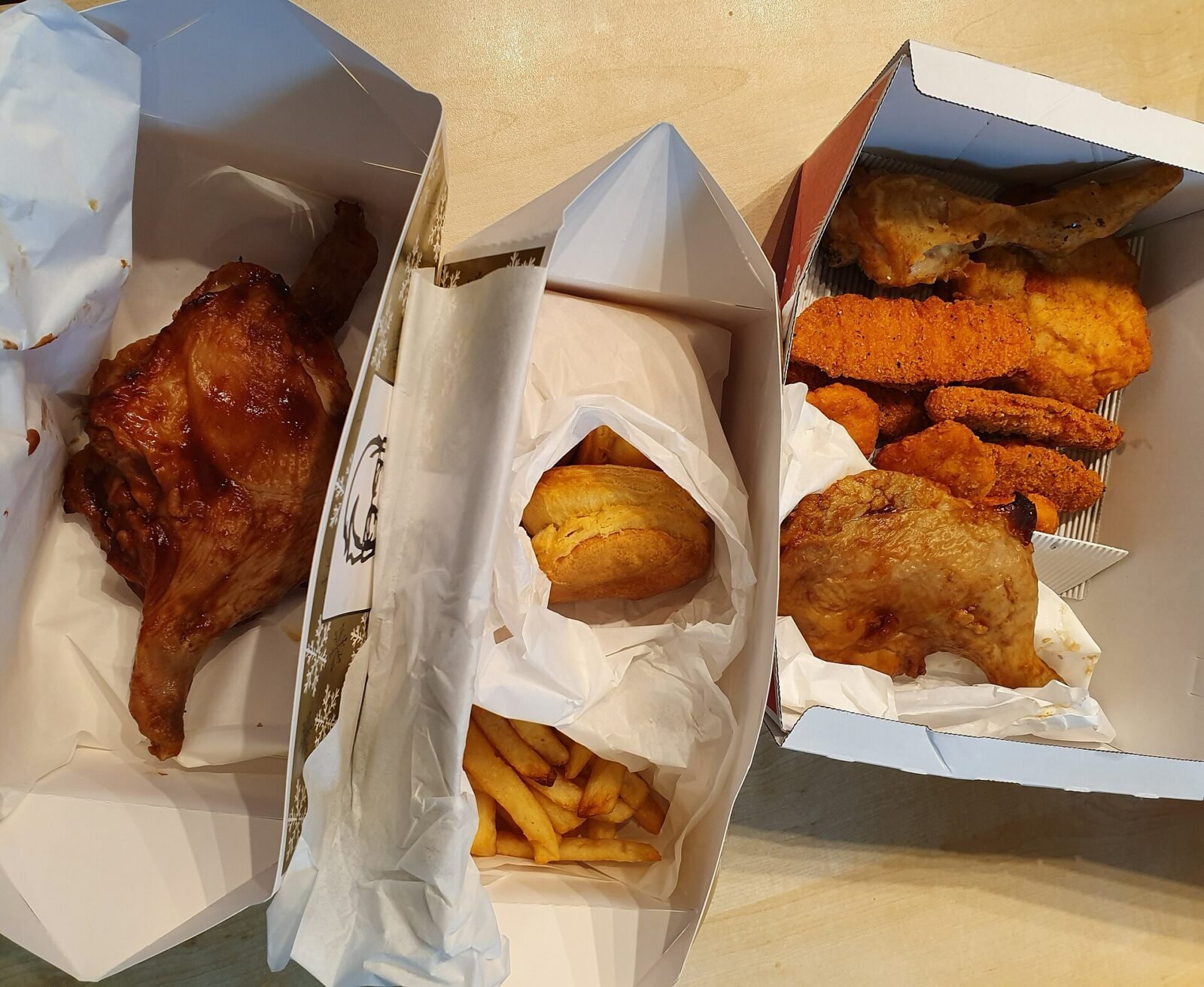
In Japan, one of the most popular Christmas meals is not turkey or ham. It is a bucket of Kentucky Fried Chicken. Every December, families across the country order KFC “Christmas barrels” weeks in advance, and lines can form outside restaurants on Christmas Eve. The tradition is the result of a marketing idea from the early 1970s that worked better than anyone expected.
The short answer
Japanese people eat KFC on Christmas because of a KFC Japan promotion. In 1970, Takeshi Okawara, the manager of the first KFC restaurant in Japan, began selling fried chicken “party barrels” as a Christmas dinner, a stand-in for the American turkey meal. In 1974 KFC Japan took the idea nationwide with an advertising campaign called Kurisumasu ni wa Kentakkii, “Kentucky for Christmas.” Because Christmas had no fixed food tradition in Japan at the time, the slogan filled the gap, and the habit stuck.
Why the idea worked in Japan
Christmas is not a religious holiday for most people in Japan, where Christians are a small minority, and December 25 is a regular working day. But Western-style Christmas decorations, gifts and music were becoming popular in the 1970s. Families wanted a way to celebrate, and there was no traditional dish to go with it.
Turkey was also hard to find and most Japanese homes did not have ovens big enough to roast one. A ready-made bucket of chicken, picked up on the way home, solved both problems. KFC was already associated with America, which made it feel right for an American-style holiday.
How big the KFC Christmas tradition is today
Japan is one of KFC’s largest markets in the world, with more than 1,000 restaurants. According to figures cited by the company’s history, the sales made around Christmas Eve alone account for nearly 5 percent of KFC Japan’s annual revenue. Special Christmas packs, usually chicken plus a cake or other sides, are pre-ordered from November, and customers without a reservation can face long waits on December 24.
What else Japan eats on Christmas
The other must-have is the Japanese Christmas cake: a light sponge cake covered in whipped cream and topped with strawberries. It is eaten on Christmas Eve and shared with family or friends. The style was popularized by the confectioner Fujiya and became a symbol of a modern, Western-style celebration.
Christmas Eve itself also has a different meaning in Japan. It is often treated as a romantic night for couples, closer to Valentine’s Day in the US, while New Year’s is the big family holiday.
How it compares with Christmas in the US
- Main dish: in the US, Christmas dinner usually means ham, turkey or roast beef cooked at home. In Japan, it is often fried chicken bought from a fast-food chain.
- Holiday status: Christmas is a federal holiday in the US. In Japan, most people work on December 25.
- Who celebrates: in the US, Christmas is a family day with religious roots for many. In Japan, it is a secular, festive season, and Christmas Eve is a popular date night.
- Dessert: Americans think of pies and cookies; Japanese families buy a strawberry shortcake.
Why Americans find it surprising
For many Americans, KFC is an everyday meal, not something you reserve weeks ahead for a holiday. The Japanese tradition shows how a custom can be borrowed from another country and turned into something new. The idea came from an American brand and an American holiday, but eating fried chicken on Christmas Eve is now a Japanese tradition with no real equivalent in the US.
Sources
- KFC in Japan, Wikipedia (history, the 1970 party barrels, the 1974 “Kentucky for Christmas” campaign and Christmas sales share)
- Christmas cake, Wikipedia (Japanese Christmas cake and Fujiya)
